California Domestic Violence Lawyer
Family Law
Experienced Family Law Domestic Violence Attorneys in California
Holstrom, Block & Parke operates a statewide family law practice, with physical law office locations in Los Angeles, Newport Beach, San Francisco, San Diego, and Corona, along with satellite offices in Vista, Riverside, and Temecula Valley. From these locations, our attorneys serve clients throughout California in family law matters involving domestic violence, including domestic violence-related divorce, restraining orders, and custody disputes.

Our firm represents individuals on both sides of these cases: those seeking protection from domestic abuse, and those responding to domestic violence allegations that are false or exaggerated within a family law matter. Domestic violence cases sit at the intersection of deeply personal safety concerns and complex legal procedure, and we bring extensive knowledge of both to every case we take on.
When domestic violence is part of a family law matter, acting quickly matters. Protective orders, custody arrangements, and evidence gathering often need to happen fast, and delay can affect both your safety and your legal standing. If you’re dealing with domestic violence in the context of a divorce, custody dispute, or other family law matter, we encourage you to contact our office online or by phone at 855-827-6639 today to schedule a free consultation.
How a California Domestic Violence Attorney Provides Immediate, Aggressive, and Effective Legal Counsel
When domestic violence is involved in a family law case, protecting your rights and safety has to come first. Our attorneys move quickly to help clients understand their legal options and pursue the protection they need, whether that means securing a restraining order or responding to allegations made against them.
Understanding California’s domestic violence laws is essential to handling these cases effectively, and our attorneys bring that knowledge to every stage of representation. We assist clients with restraining orders, custody disputes, and divorce proceedings that involve allegations of abuse, recognizing that these issues are often deeply intertwined. From the first filing through the final resolution, we provide guidance through every stage of the legal process, so our clients always understand what to expect next.
What is Considered Domestic Violence in California?
Under California law, domestic violence covers a broader range of conduct than many people realize, and understanding the full definition is important for anyone involved in a family law case touching on these issues.
Physical abuse includes any use of force that causes or attempts to cause physical harm, including behavior that results in great bodily injury. Criminal threats and intimidation can also constitute domestic violence, even without physical contact. Emotional and psychological abuse involves conduct intended to control or degrade a partner through fear, humiliation, or manipulation, often causing significant emotional distress.
Financial abuse occurs when one party controls or restricts the other’s access to money or resources as a means of control, while coercive control describes a broader pattern of controlling behavior that may not involve a single identifiable incident but nonetheless traps a partner in a harmful dynamic. Sexual abuse within an intimate partner relationship is also recognized as a form of domestic violence under California law.
California Domestic Violence Laws Every Family Should Understand
Understanding the relationship between family law and criminal proceedings is important, since a single incident of domestic abuse can result in both a criminal case, potentially involving domestic violence charges filed by a law enforcement agency, and a separate family court matter addressing restraining orders or custody.
The definitions and penalties for a criminal domestic violence conviction can be found under California Penal Code 273.5. Meanwhile, California’s Domestic Violence Prevention Act (DVPA) provides the framework for protective orders available through family court, giving victims a civil law avenue for protection that operates separately from (but often alongside) any criminal proceedings.
California’s domestic violence laws pertaining to family law matters are as follows:
- California Family Code Section 6203 defines what constitutes abuse for purposes of domestic violence cases, including sexual assault, threats, harassment, stalking, emotional abuse, destroying personal property, disturbing another person’s peace, coercive control, or other conduct that causes harm or places someone in reasonable fear for their safety. This broad definition allows courts to address several forms of domestic abuse in family law proceedings.
- California Family Code Section 6211 identifies the relationships that qualify for protection. The statute applies to spouses, former spouses, individuals who are dating or previously dated, people who live together or previously lived together, individuals who share a child, close relatives, and certain other family or household members.
- California Family Code Section 3044 creates a rebuttable presumption in child custody cases involving domestic violence. If a court determines that a parent committed domestic violence against the other parent, the child, or certain other protected individuals within the previous five years, the law presumes that awarding sole or joint custody to that parent is not in the child’s best interests. The accused parent may present evidence to overcome this presumption, but the court must carefully evaluate the statutory factors before making a custody determination.
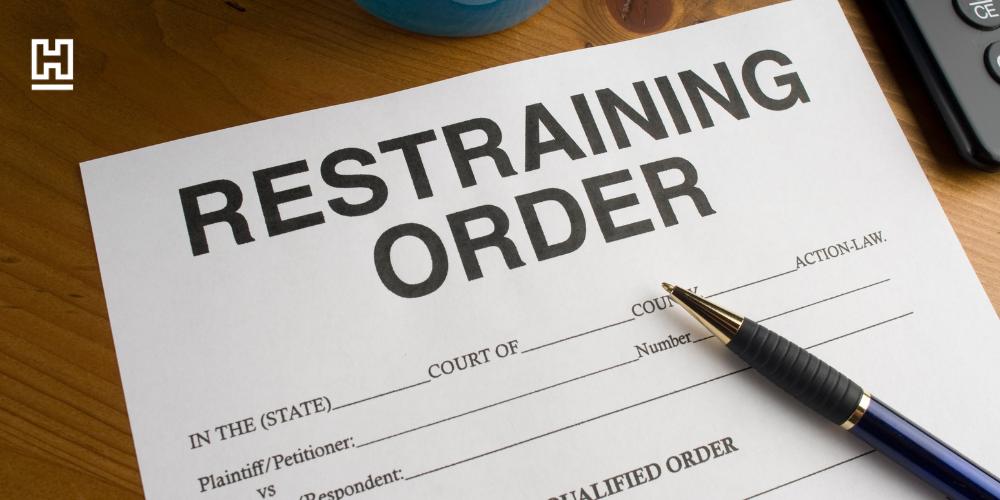
Types of Restraining Orders and Protective Orders in California
There’s a lot of confusion about restraining orders and protective orders, and some of the confusion stems from the fact that there are several different types of orders:
- An Emergency Protective Order is usually requested by police and issued quickly by a judge in response to an emergency situation. These orders only remain in effect for 5-7 days, so it will be necessary to get a different type of order to provide longer protection.
- A Criminal Protective Order is usually requested by the prosecutor in a criminal domestic violence case to protect the victim. This order is issued by the criminal court.
- A Civil Restraining Order is issued at the request of someone who wants to prohibit harassment or other harmful conduct, and it is not necessary to have an ongoing criminal proceeding to obtain this type of order. This order is issued by a civil court.
- A Temporary Restraining Order is issued on a short-term emergency basis (like an emergency protective order), but it comes from a different court. An individual or their attorney may request this type of order, unlike criminal orders, which originate from law enforcement or prosecution.
Often, a civil restraining order can include more specific protections than a criminal protective order. At Holstrom, Block & Parke, our experienced California family law attorneys will work with you to get the right emergency protection as well as help seek an order for longer protection. Your partner may have the right to contest terms if they are too strict, so we need to develop appropriate restrictions that will meet with court approval.
How Do Domestic Violence Cases Work in California?
A domestic violence case in family court typically follows a defined sequence, though the pace can move quickly when safety is at risk.
The process usually begins with filing for a domestic violence restraining order. Courts can issue temporary protective orders the same day in urgent situations, providing immediate protection while the case proceeds. From there, the matter moves to court hearings and evidence. If the court finds the evidence supports it, a permanent restraining order may be issued. Finally, enforcement of court orders ensures that violations are addressed, often through law enforcement involvement if a restrained party fails to comply.
Filing for a Domestic Violence Restraining Order
When a protected party files a request for a Domestic Violence Restraining Order (DVRO) with the appropriate California family court, the request must explain the details of the alleged abuse and ask the court to provide legal protections. The filing party may request relief such as no-contact provisions, exclusive use of a shared residence, temporary child custody, child support, spousal support, or other orders permitted under California law.
Temporary Protective Orders
If the court believes immediate protection is necessary, it may issue a Temporary Restraining Order (TRO) before a full hearing takes place. These temporary orders are intended to provide short-term protection while the case is pending. Depending on the circumstances, a TRO may prohibit contact, require one party to leave a shared home, establish temporary custody and visitation arrangements, or provide other relief until the court can hear both sides.
Court Hearings and Evidence
After a temporary order is issued, the court schedules a hearing where both parties have the opportunity to present their case. Each side may submit evidence such as testimony, photographs, medical records, text messages, emails, social media communications, police reports, and witness statements. The judge reviews all admissible evidence before determining whether a longer-term restraining order should be granted and what additional relief, if any, is appropriate.
Permanent Restraining Orders
Following the hearing, the court may issue a permanent Domestic Violence Restraining Order if it determines the legal requirements have been met. Despite the name, a permanent restraining order does not necessarily last forever. California courts may issue these orders for a specified period (typically up to five years) with the possibility of renewal before the order expires if continued protection is warranted.
Enforcement of Court Orders
Once a restraining order is issued, all parties must comply with its terms. Violating a domestic violence restraining order can result in serious legal consequences, including arrest, criminal charges, fines, or jail time. If circumstances change, either party may ask the court to modify or terminate certain provisions, but the existing order remains fully enforceable unless and until the court approves a change.

How a Family Law Attorney Can Help With Your Domestic Violence Case
An experienced family law attorney plays a central role at every stage of a domestic violence case, beginning with evaluating your legal options to determine which type of protective order, if any, best fits your circumstances. From there, your attorney can assist with preparing petitions and supporting evidence, ensuring the request presented to the court is thorough and well-documented.
At Holstrom, Block & Parke, our attorneys focus on representing clients at hearings, presenting evidence clearly and advocating firmly on our clients’ behalf. Because domestic violence cases so often overlap with other family law issues, we also assist with addressing custody, visitation, and support issues that arise alongside a protective order request. As circumstances change, we help clients with modifying or enforcing court orders to ensure ongoing protection remains effective.
Domestic Violence and Child Custody in California
When domestic violence is present in a family, its effects on custody decisions can be significant. California courts apply the best interests of the child standard to every custody determination, and evidence of domestic violence weighs heavily in that analysis.
California law includes a presumption against awarding custody to abusive parents, meaning a parent with a documented history of domestic violence may face significant obstacles to obtaining joint or sole custody. In some cases, courts may order supervised visitation to allow continued contact between a child and the non-offending (or even the accused) parent while still prioritizing the child’s safety. In situations involving an immediate risk, courts can issue emergency child custody orders to protect a child without delay.
Throughout all of these proceedings, our firm’s focus remains on protecting children from ongoing harm, whether that means pursuing emergency child custody orders, advocating for appropriate custody restrictions, or addressing child endangerment concerns directly with the court.

Why Choose Holstrom, Block & Parke as Your California Domestic Violence Lawyer?
Holstrom, Block & Parke includes a team of skilled Certified Family Law Specialists and brings several hundred years of combined experience handling family law matters involving domestic violence offenses throughout California. We understand that these cases can affect every aspect of a family’s future, including divorce, child custody, visitation, and financial support. Whether the allegations involve a spouse, domestic partner, or another qualifying family member, our attorneys help clients understand their rights and responsibilities while guiding them through the California legal system.
Domestic violence cases require careful attention to the facts because every situation is different. Our attorneys represent clients seeking protection as well as those responding to false allegations or claims made by an alleged victim, recognizing that the court’s decisions may significantly affect one or both parties and their children. From our law office locations across the state, we provide comprehensive family law representation backed by a thorough understanding of California’s domestic violence laws and family court procedures.
California Domestic Violence Law Firm Advocating for Clients Throughout the State
Southern California Domestic Violence Lawyer Representation
- Los Angeles County
- Los Angeles Domestic Violence Attorneys
- Sherman Oaks Domestic Violence Attorneys
- San Dimas Domestic Violence Attorneys
- San Marino Domestic Violence Attorneys
- Pasadena Domestic Violence Attorneys
- Burbank Domestic Violence Attorneys
- North Hollywood Domestic Violence Attorneys
- La Crescenta Domestic Violence Attorneys
- Riverside County
- Orange County
- San Diego County
Northern California Domestic Violence Lawyer Representation
- San Francisco County
- Sacramento County
- Santa Clara County
- Alameda County
- Marin County

Contact Holstrom, Block & Parke Now to Get Protection
If domestic violence is affecting you or your family, we encourage you to seek legal guidance as soon as possible. Whether you need protection from abuse or need to respond to allegations made against you, prompt action can make a meaningful difference in the outcome of your case.
Holstrom, Block & Parke remains committed to protecting clients and their families throughout California. Contact our office at 855-827-6639 or via our online form to schedule a free, confidential consultation and take the first step toward resolving your domestic violence-related family law matter today.
What Our Clients Are Saying About Us
Posted on Google
 Theodore TakataJune 8, 2025
Trustindex verifies that the original source of the review is Google.
Highly recommend this family law practice, especially Jim Parke and Corrina Fuller. They handled a truly complex and tortuous divorce proceeding with exceptional professionalism. Corrina's meticulous tracking of details over the long case timeline was invaluable, and Jim Parke, who replaced prior attorneys on the case, quickly came up to speed. Their combined expertise led to our case settling exactly as we hoped. Thank you both!Posted on Google young kwunJune 8, 2025I experienced Dayne Holstrom, and Jim Parke for years. They are excellent, and professional. Corrina Fuller, paralegal, as well.Posted on Google
 Joaquin GonsalvesJune 6, 2025Five-Star Review of Holstrom, Block & Parke, APLC – My Lifeline Through a Difficult Divorce Going through a divorce was one of the most emotionally and mentally exhausting periods of my life, especially with the complex custody and financial issues involved. I knew I needed a legal team that not only understood the law but could also offer real strategy, compassion, and clarity during the chaos. That’s exactly what I found with Holstrom, Block & Parke, APLC. From my first consultation, I felt a genuine sense of confidence in their team. They didn’t sugarcoat anything—something I deeply appreciated. They were clear about what the law allows, what options were available to me, and what outcomes were realistic given my situation. I never felt like just another case file; I felt seen, heard, and truly supported. My divorce involved complicated financial matters, including the division of a small business and disputed assets, as well as a sensitive custody battle. The attorneys at HBP were meticulous and strategic. They knew how to protect what I had worked so hard for while also fighting for a custody arrangement that prioritized my children’s well-being. What impressed me most was their ability to keep negotiations grounded, even when tensions escalated. And when we needed to take things to court, they were prepared, professional, and incredibly persuasive. Their depth of experience showed in everything they did—from drafting documents to courtroom strategy. At one point, false accusations were made against me that could have impacted my parental rights. My attorney handled the situation with calm determination and presented the facts so clearly that the judge saw through the accusations and ruled decisively in my favor. Thanks to Holstrom, Block & Parke, I was able to walk away from a very difficult chapter of my life with my dignity intact, my financial interests protected, and a custody agreement that allows me to maintain a strong, loving relationship with my children. If you’re facing a divorce or custody battle and want a legal team that is smart, tenacious, and truly committed to your best interests, I cannot recommend Holstrom, Block & Parke enough. They don’t just help you survive the process—they help you find a way forward.Posted on Google
 Satbir SinghJune 2, 2025I have had the privilege of being a client of Holstrom, Block & Parke, APLC since 2022, during which time I have been navigating a highly contentious and complex divorce, accompanied by significant child custody matters. Throughout this emotionally and legally challenging period, the firm has provided unwavering support, expert guidance, and strong advocacy on my behalf. The attorneys and staff at Holstrom, Block & Parke have demonstrated consistent professionalism, attentiveness, and integrity. They have kept me thoroughly informed at every stage of the process, explained legal strategies in a clear and comprehensive manner, and remained receptive to my concerns and feedback. Their responsiveness and commitment to my case have brought a sense of clarity and confidence during an otherwise uncertain time. As a professional myself, I greatly value the firm’s individualized approach to each client and their steadfast dedication to achieving the best possible outcomes. Their ability to balance legal expertise with compassion is both rare and commendable. It is without reservation that I offer my highest recommendation for Holstrom, Block & Parke, APLC. They are an exceptional legal team, and I am deeply grateful for their representation.Posted on Google
 Sparky 57May 30, 2025I have found HBP to be responsive and detailed with extensive resources to support my case as necessary. The balance of assertiveness and professionalism in court is much appreciated. The staff is organized and efficient. They are well known and respected by the courts. I highly recommend them.Posted on Google
 J Mr.May 30, 2025I had the pleasure of working with Ms. McBride and Mr. Chase. They took the time to understand my situation and immediately went to work. Highly professional and knowledgeable, they make a great team. Most importantly, they showed that they cared, which made all the difference in the lengthy legal process. Thank you to you both again for guiding me!Posted on Google
 Alana EdwardsApril 9, 2025Sam McBride and James Chase at Holstrom, Block & Parke have handled two family law situations for me over the last 8 months. They proved to be experienced and knowledgeable in family law, as well very strategic in handling of these cases. They are very upfront about the entire legal process and honest about potential outcomes. I have been able to put my trust in them throughout these cases. They have proven that they are excellent at handling family law cases and they also provided support and timely responses to all of my questions. I never felt like I was just another case for them. Their consistency in responses to my questions and preparation of my court filings made me feel that I was not just another case for them; I always felt that they cared about making sure my voice was heard by the court. Highly recommended.Posted on Google
 SARAI BoeJuly 18, 2024Xenia was an amazing lawyer, I totally recommend This law firm.Load more

With centuries of combined experience, the Southern California attorneys at Holstrom, Block & Parke explore every legal avenue to achieve the best outcome. We’re proud to be ranked a Best Law Firm by Best Lawyers—a testament to our commitment to excellence and client success.